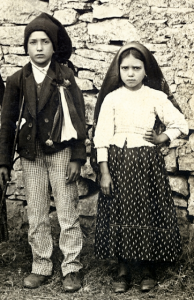
Our Lady’s Masterpiece in the Souls of Francisco and Jacinta

Saint of the Day,  October 13, 1971


ADVERTISEMENT

“A Roman and Apostolic Catholic, the author of this text submits himself with filial devotion to the traditional teaching of Holy Church. However, if by an oversight anything is found in it at variance with that teaching, he immediately and categorically rejects it.”

 The words “Revolution” and “Counter-Revolution” are employed here in the sense given to them by Prof. Plinio Corrêa de Oliveira in his book Revolution and Counter-Revolution, the first edition of which was published in the monthly Catolicismo, Nº 100, April 1959.


by Plinio Corrêa de Oliveira
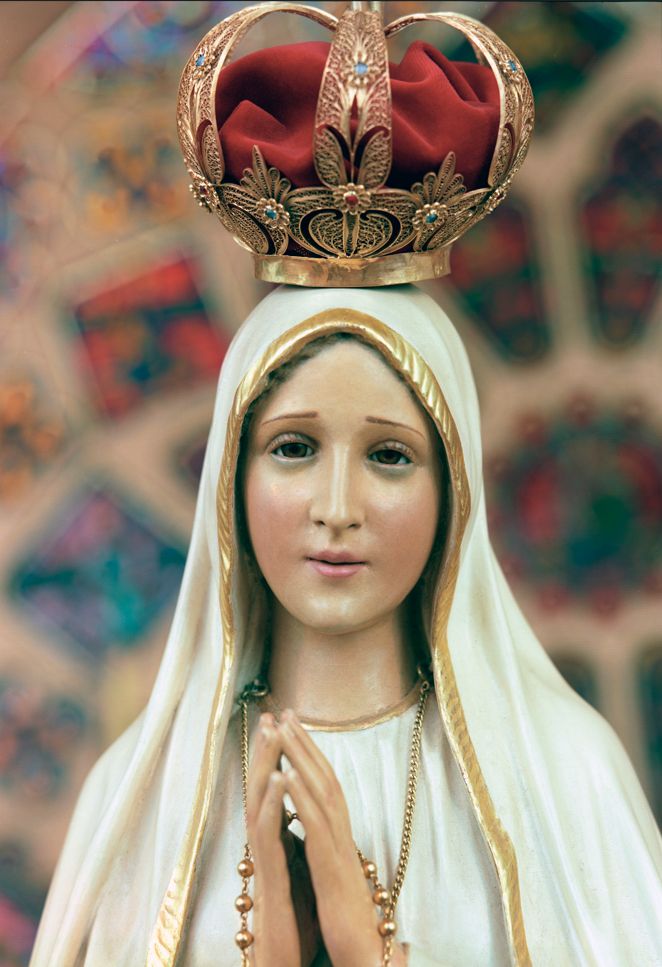


Our Lady was truly the spiritual director of Francisco, Jacinta and Lucia. She took it upon herself to achieve a masterpiece, and she was successful. From her prodigious hands came three angels in the flesh who were three authentic heroes.
The three children quickly took giant strides toward perfection, by fulfilling to the letter the words of St. Louis de Montfort: “In the school of the Virgin the soul progresses more in a week than in a year outside of it.” The pedagogy of the Mother of God is unequalled. In two years the Blessed Virgin managed to lift up two of the little children, Francisco and Jacinta, to the highest peaks of Christian holiness.
Jacinta had a serious, modest and amiable bearing, which seemed to transmit the presence of God in all her actions, something proper to one advanced in age and with great virtue. No one ever saw in her that excessive frivolity or enthusiasm children normally have for pranks.
Other children did not run to her side as they did others. Perhaps this was because her seriousness and bearing were far superior to her age. If any child or even adult said or did something unbecoming in her presence, she rebuked them saying, “Do not do this, because it offends Our Lord and He is already so much offended.”
Francisco felt attracted to a life of asceticism and contemplation, therefore a vocation to be a hermit. He would often disappear from his sisters’ sight and stay in deserted places, thinking alone. “What were you doing for so long?” Lucia asked. “I was thinking about God Who is so sad because of the many sins. If I could console Him! Jesus is so sad and I want to comfort Him with prayer and penance.” On another occasion he said, “I love God a lot, but He is so sad because of so many sins! We must not commit even the smallest sin.”
One day Lucia accepted the entreaties of her friends to participate in some amusements proper to her age, Francisco called her aside and said very seriously: “So you’re going back to these games after Our Lady appeared to you? Lucia answered, “but Francisco, they’ve asked me so insistently!’” But a logical and stern Francisco replied, “Everyone knows that Our Lady appeared to you and so they should not be surprised that you no longer want to play or dance.”
The three children took advantage to visit Our Lord on their way to and from school spending long hours before the tabernacle. Especially Jacinta and Francisco, to whom the Virgin had promised she would soon come to take them to Heaven. Believing to have been exempt from lessons, they recollected in church more often speaking alone with Hidden Jesus. Hidden Jesus is how they referred the Holy Eucharist.
Jacinta would ask Lucia: “Have you done many sacrifices today? I did many. I also prayed many ejaculations. I like Our Lord and Our Lady so much that I never get tired of saying that I love them. When I tell them that repeatedly I often seem to have a fire in my chest, but it does not burn me.”
At other times she would tell Lucia: “Look, Lucia. Our Lady came to see us these days and she came to say that she will come very soon to take Francisco to heaven, and she asked me if I still wanted to convert more sinners. I told her yes. Then she told me that she wants me to go to two hospitals, not to cure myself but to suffer more for the love of God, for the conversion of sinners and in reparation for the offenses committed against the Immaculate Heart of Mary. She told me that you would not go, that my mother would take me there and then I would be left alone.”
Sometime later, Francisco told Lucia: “I am very ill and in a short while will go to heaven.” Lucia: “Make sure to not forget to pray a lot for sinners, for the Holy Father, for me and Jacinta.” Francisco: “Yes, I do. But ask Jacinta for these things, as I’m afraid I may forget them when I see Our Lord. Besides, I want first to console Him.”
These texts show a remarkable grace because they reveal many great and small aspects of Our Lady’s work with these three children. However, we must first consider the symbolic value of her work upon them. Those who imagine this work is merely about three children are mistaken. This is a work that smoothly transformed the children from one moment to the next by dint of Our Lady’s repeated apparitions. Our Lady said she was upset with one of the children, Francisco, who did not see her for that reason. Therefore, Francisco can be considered a convert.
This is akin to the Secret of Mary. It is one of those profound actions of grace in the soul, actions that develop without the person realizing it. The person feels increasingly freer–unimpeded to practice good as the defects that hamper and bound him to evil gradually dissolve. He grows in the love of God, in readiness to dedicate himself, in opposition to sin. All this takes place in the soul in a marvelous way. It happens without the great battles of an admirable and methodical ascension to Heaven by practicing virtue and holiness, like those who fight according to the classical system of the spiritual life. Instead, Our Lady changes him from one moment to the next.
If Our Lady’s work at Fatima with these two children was like this, then we may ask ourselves if this has a symbolic value indicating how Our Lady will act upon the whole of humanity when she fulfills the promises of Fatima. Hence we may ask whether we see a beginning of the Reign of Mary, as the triumph of the Immaculate Heart over two souls who proclaimed Our Lady’s great revelation and because of their sacrifices on earth and prayers in Heaven that greatly help souls to accept the message of Fatima.
Now then, Francisco and Jacinta are natural intercessors for us to ask and obtain from Our Lady that she immediately starts the Reign of Mary in us through this mysterious transformation, which is the Secret of Mary. We must earnestly ask both Jacinta and Francisco that they transform us by giving us the gifts they received and that they especially watch over and pray for those who have the mission of living and preaching the message of Fatima.
Let’s recall an important word about the relationship between the message of Fatima and the calling of the TFP. It has been said that our spiritual life grows to the degree we seriously consider the facts:
  • That the world today is in pitiful decay and nearing complete ruin;
  • That this ruin is the fulfillment of the punishments prophesied by Our Lady at Fatima;
  • And the more we place ourselves in this perspective, the more fervent our spiritual life will be; and conversely, the more we move away from this perspective, the more our spiritual life decays.
Even the most recent graces the group has received, such as greater interest in reading clippings and studies about international politics are related to the idea that the days foreseen by Our Lady are approaching. Then we must admit that believing in and accepting the Bagarre is a fundamental element of the TFP’s very existence, and Our Lady’s prophecy is the most decisive argument proving that the Bagarre will come. Many philosophical and theological arguments can be made to support this but while private revelations or interpretations of the Scripture are not sufficiently clear to show that the Bagarre will come, the revelation of Fatima is the pillar upon which I supported my lecture showing that we will have a Bagarre and then proving with other arguments that it will come in our days.
In other words, the Fatima revelations are pillars of the Counter-Revolution. Without the Fatima revelations I would not have conclusive evidence to demonstrate my argument. So we see that Jacinta and Francisco play a prophetic role because they are heralds of Our Lady’s announcement that the Bagarre will take place.
It is also interesting to note the effect of the Secret of Mary on these children. They changed, but what were the outward manifestations of this change? Three actions indicate this well: great seriousness, spirit of prayer and spirit of sacrifice. Added to this was a very great conviction of their mission and a desire to live for that mission. A spirit of seriousness was shown when Jacinta reprimanded Lucia because she accepted to join the little Portuguese dance with other children and that was a lack of seriousness. As if to say, “They would understand your refusal, and if they did not understand it would be their fault. But you should have refused.” One must be very serious in order to please Our Lady.
The text says that Francisco was logical and reasoned very firmly about his duties. It even employs a word that could be seen as pejorative today: he was stern. That means he was completely logical and deduced from his mission that he had to be serious, refrain from saying anything unsuitable and act properly so he would miss no opportunity to lead by example. This seriousness leads children, in their humble conditions, to become combative. Jacinta would not fail to censure or reprehend someone whom she saw doing something wrong: “this is not good,” and provide a religious reason for it: “God should not be offended. He is already so offended in our time and you want to offend Him even more? You want to add to this mountain of sins that are committed?”
So we perceive how seriousness and logic are fruits of the Secret of Mary. If we want to correspond to the graces of Our Lady, we must become serious and logical. When we see serious and logical people in the TFP, we should admire them, draw closer to them and allow ourselves to be penetrated by their spirit instead of taking things playfully, with megalice or catering to the patio of vanities. If Francisco gave us the exalted honor of being a member of the TFP, his conduct would be a total combat against the patio of vanities by fighting all that is fatuous, foolish and mega by fostering an utter and complete seriousness.
We can also see their spirit of sacrifice when Our Lady tells the two children that they will die soon which should have frightened them. As you well know, death is a punishment and the nearness of death generally causes panic when a person does not have a special grace. Francisco was cheerful as he saw death approaching; he would make the sacrifice Our Lady had asked. He did not miss any earthly goods. He wanted to go to heaven and leave this earth sacrificing his life for the victory of the Catholic cause. Our Lady’s request to Jacinta was somehow less, but somehow even more terrifying. She asked her to live a little longer by placing death a little further away, but then she explained that Jacinta would live longer in order to suffer more. Who is not afraid of a life of suffering? Even more, she was to bear one of the sufferings that frighten children the most, to be sick and away from their parents.
You may well remember how insecure and terrified you felt with every little ache, sore throat or cold when away from your parents. I simply could not imagine getting sick away from my mother because to me the ideas of mother and of ​​healing were intertwined. I imagined that if she left me, my health would decline unto death and I did not want to die in any way whatsoever. Naturally, a child does not measure well the severity of his disease, and if his throat is too tight he thinks he will suffocate. Our Lady said: “You will be taken to Lisbon and your mother will leave you.” In other words, “you will get sick and die without the assistance of your loved ones.” Indeed she died alone and she accepted what I believe is the toughest sacrifice a child could make. You see how the Secret of Mary led her to make that sacrifice?
Then you have the spirit of prayer. We see how they prayed continuously. What did they pray for? They prayed for the Catholic Cause because the very essence of the Catholic Cause is for God not be offended but glorified and they had this continually in mind and prayed a lot. What was the source that continually nourished them? It was the belief in their own mission, the belief that Our Lady’s promise to them would be fulfilled, that Lady who Francis did not see but whose voice he heard, whom Jacinta saw and whom Francisco in heaven undoubtedly contemplated face to face.
What application can we draw from these considerations? These are the virtues to which we are invited and our vocation contains a kind of root of the Secret of Mary. It is a fact that, from the outset, those who join the TFP with good dispositions experience several improvements in their souls and then go through the trials that we all unfortunately know. But of itself this has something similar to the Secret of Mary. Every TFP new TFP member has a great forward momentum in his vocation, which for him is a certain transformation. This transformation is quick, easy and attractive like the one operated by the grace of the Secret of Mary. Moreover, our vocation is ordered to the facts announced by Fatima. So here is yet one more relationship between our vocation and the three children’s.
I believe Our Lady of Fatima will be particularly pleased with the prayer of those asking her to help them be faithful to this vocation. Also, she will assist us through the seers’ intercession so that we may obtain the grace of fidelity to our vocation even before receiving the Secret of Mary. In other words, the person may receive enormous graces to be faithful to his vocation even in very difficult circumstances, thanks precisely to the Secret of Mary. Here we see the relationship to but also the fact that our calling requires these four virtues: the virtue of believing in our vocation, to be serious, the spirit of prayer and the spirit of sacrifice. This is what makes a TFP member, volunteer or supporter and why it is so necessary to ask for it through their intercession.
In Heaven the seers contemplate Our Lord and Our Lady Who are increasingly offended. We should ask them to pray that this torrent of insults cease and that Our Lady may finally convert men. Through them we may ask Our Lady: “Let thy Kingdom urgently come to us, O Lady. We beseech Thee earnestly, vehemently and fervently that thy kingdom descends upon us. That thou mayest intervene in events, O Lady, by frustrating the plans of thy adversaries, ultimately reducing their evil and sinful designs to nothing and establishing thy Kingdom on earth.” This is what we should ask Our Lady today with great insistence through the seers’ intercession.
Aside: Could you say exactly what it means to be serious and not to be serious?
It is not easy to give a definition. Let us say that there is an outer seriousness and an inner seriousness. The outer seriousness is defined negatively. A serious man laughs little and talks little about trifles. Usually when he speaks he realizes that his mind tends to relate what he says with the higher aspects of what he says, with thoughts of a higher order. This is the outward manifestation of seriousness. The individual’s actions are logical, his words are consistent and his action is constant. These are other outward manifestations of seriousness.
Now, we can give a deeper definition of seriousness. It is the disposition of the soul by which the person has an appetite to see the higher and nobler aspects of everything he is saying or doing. Accordingly, his mind constantly rises to higher things as well. Many people may frown but are not serious: they are just ill tempered and moody.
Now it is much more difficult for a person to spend the whole day laughing and still be serious. I see no way of reconciling one thing with the other. Of course a person can occasionally say something that has a certain spirit, a certain grace, have a certain mildness in manners without ceasing to be serious just as long as we realize that even in his rare joshing and kindness some more elevated aspect of soul always enters.
Thus, seriousness ultimately is an unceasing tendency of the mind toward the higher aspects of all things. For a Catholic, that means having a continuing tendency to consider things in light of Catholic doctrine and hence in light of scholastic philosophy and theology as taught by the Church. It is a continuing tendency to consider matters large or small in light of their higher aspects. Therefore, a continuous tendency to think about elevated issues. Naturally, elevated according to each person’s cultural level, but nonetheless elevated.
External effects: little playing around, logic, consistency and constancy. Laughing infrequently is not enough for a person to be considered serious. Sometimes a person that laughs little is simply ill tempered. Sometimes cantankerous people also laugh too much!
When a person laughs, it is necessary that a certain element of seriousness appears in the way he deals with the issue. The fact that a person has a cheerful disposition does not mean he is not serious. Cheerfulness sits well with seriousness as long as one perceives that in the way he talks, converses or deals with an issue he has his mind turned to higher things.

Contato